Real estate is built on relationships, but managing hundreds of buyers, sellers, investors, property inquiries, follow-ups, and transactions manually can quickly become overwhelming. This is where real estate CRM software becomes essential.
A powerful real estate CRM gives agents and brokerages one place to capture leads, organize client information, automate follow-ups, manage deals, and monitor their sales pipeline.
However, not every CRM is designed around the unique workflows of property professionals. Some platforms specialize specifically in real estate, while others provide broader sales and marketing capabilities that can be customized for agents and brokerages.
In this guide, we compare some of the best CRM for real estate agents in 2026, including Follow Up Boss, Wise Agent, Zoho CRM, Pipedrive, HubSpot, Salesforce, Real Geeks, and BoldTrail (the successor to kvCORE).
Best Real Estate CRM Software at a Glance
| Real Estate CRM | Best For | Key Strength |
|---|---|---|
| Follow Up Boss | Growing real estate teams | Lead routing and follow-up |
| Wise Agent | Individual agents and small teams | Real-estate-specific workflows |
| Zoho CRM | Customization | Automation and omnichannel communication |
| Pipedrive | Pipeline management | Visual sales pipelines |
| HubSpot CRM | Marketing and CRM | Sales and marketing integration |
| Salesforce | Large brokerages | Enterprise customization |
| Real Geeks | Lead generation | CRM + real estate websites |
| BoldTrail (formerly kvCORE) | Brokerages | All-in-one real estate platform |
What Is a Real Estate CRM?
A real estate CRM—customer relationship management system—is software designed to help real estate businesses manage relationships with prospects and clients.
Instead of keeping leads in spreadsheets, emails, WhatsApp conversations, calendars, and notebooks, a CRM centralizes the information.
A good real estate agent CRM can help you:
- Capture buyer and seller leads
- Organize contact information
- Track calls, emails, and messages
- Automate lead follow-ups
- Schedule appointments and property visits
- Manage property sales pipelines
- Assign leads to agents
- Track marketing sources
- Maintain client relationships after closing
- Generate reports on agent and team performance
The right CRM becomes especially valuable as an agent's database grows because it reduces the chance that valuable prospects are forgotten.
1. Follow Up Boss
Best for: High-performing real estate teams
Follow Up Boss is one of the most specialized options on this list because the platform is built specifically around real estate sales teams.
It can centralize leads from many real estate lead sources and automatically route them to agents. Follow Up Boss says it can pull in leads from over 200 sources, with routing options such as first-to-claim and rules based on location, price point, or listing ownership.
Agents can communicate through calls, email, and integrated texting while maintaining communication history inside the contact record. Its phone tools also provide automatic call tracking and AI-generated call summaries.
Key Features
- Automated lead distribution
- Email and text follow-ups
- Integrated calling
- AI call summaries
- Lead activity tracking
- Team reporting
- Real estate integrations
- Mobile access
For teams managing leads from multiple portals, websites, advertising campaigns, and referral sources, Follow Up Boss is a strong real estate CRM software option.
2. Wise Agent
Best for: Solo agents and smaller real estate teams
Wise Agent combines CRM functionality with marketing, lead management, transaction tracking, and productivity tools developed specifically for real estate professionals.
The platform includes contact management, lead pipelines, email and text marketing, drip campaigns, transaction checklists, commission reporting, and team collaboration tools.
Its transaction management capabilities differentiate it from many general-purpose CRMs. Agents can create transaction checklists and monitor deals from contract through closing.
Wise Agent also connects with a broad range of real estate tools, including transaction-management platforms, so agents can reduce duplicate data entry across their workflow.
Key Features
- Contact management
- Real estate lead pipelines
- Automated drip campaigns
- Email and SMS marketing
- Transaction checklists
- Lead distribution
- Commission reporting
- Team management
Wise Agent can be an attractive choice for agents looking for the best CRM for real estate without adopting a complex enterprise sales platform.
3. Zoho CRM
Best for: Customizable real estate workflows
Zoho CRM is a flexible CRM platform with dedicated functionality and solutions for real estate businesses.
Agents can capture leads from web forms, social media, campaigns, and other sources before automatically assigning those leads using workflow rules.
Zoho also provides lead scoring, automated emails, omnichannel communication, document management, reports, dashboards, and extensive customization.
For property businesses, its ability to manage property information and documents alongside buyer or seller relationships is particularly useful.
Key Features
- Lead scoring
- Workflow automation
- Email automation
- WhatsApp, email, and phone communication
- Property inventory management
- Document management
- Reports and dashboards
- Mobile CRM
Zoho is worth considering when you need real estate CRM software that can be adapted around an established sales process.
4. Pipedrive
Best for: Visual property sales pipelines
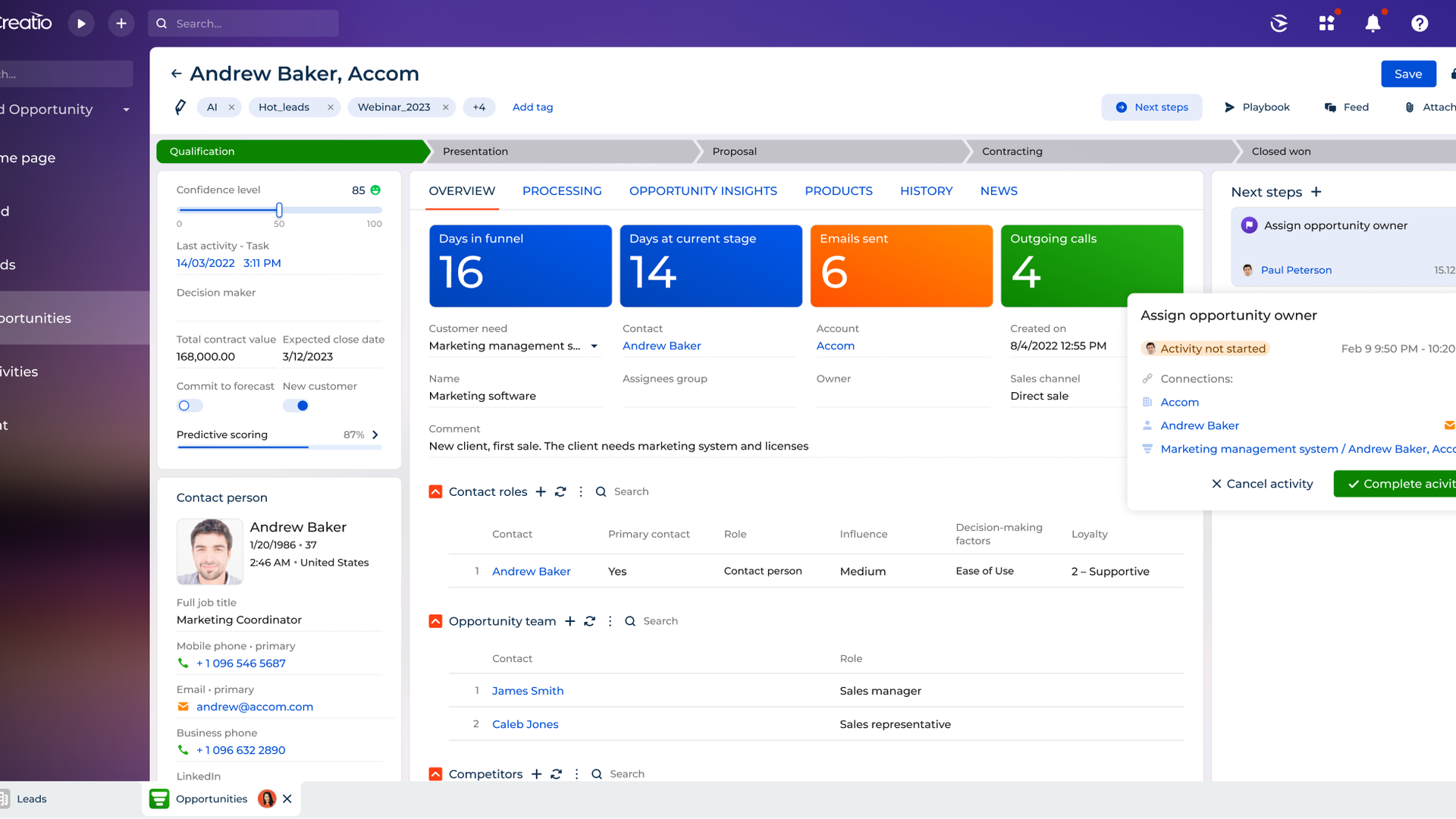
Pipedrive is particularly strong for agents who want to visualize every opportunity as it moves through the sales process.
Agents can create separate pipelines for properties, buyers, sellers, or investors and see which opportunities require attention.
Pipedrive also supports communication tracking, mobile access, workflow automation, and a marketplace containing hundreds of integrations. Its official real estate solution highlights tracking calls, emails, WhatsApp messages, property opportunities, and client information.
Key Features
- Visual deal pipelines
- Contact management
- Activity reminders
- Sales automation
- Communication tracking
- Mobile CRM
- Reporting
- Extensive integrations
Pipedrive can be one of the best CRM for real estate agents who prefer straightforward pipeline management rather than a large all-in-one property platform.
5. HubSpot CRM
Best for: Real estate marketing and inbound lead generation
HubSpot is not exclusively a real estate CRM, but its combination of marketing, sales, automation, and customer management tools makes it useful for property businesses investing heavily in digital marketing.
HubSpot Sales Hub includes lead management, sales automation, prospecting tools, pipeline management, and AI-powered sales functionality.
It becomes particularly useful when connected with HubSpot's broader marketing ecosystem, allowing businesses to connect website lead generation with sales follow-up.
Key Features
- Contact management
- Sales pipelines
- Lead management
- Sales automation
- Email tracking
- Marketing integration
- AI-assisted prospecting
- Reporting
HubSpot can suit agencies that want marketing automation and CRM capabilities within the same technology ecosystem.
6. Salesforce
Best for: Large real estate companies and brokerages
Salesforce is one of the most customizable CRM ecosystems available and is particularly suitable for larger real estate organizations with complex sales operations.
Its real estate solutions can centralize prospect and customer information, track interactions, automate processes, and provide teams with a shared source of client information.
The major advantage is customization. Larger brokerages can build specialized workflows, dashboards, automations, and integrations around their business model.
Key Features
- Advanced CRM customization
- Workflow automation
- AI capabilities
- Lead and opportunity management
- Detailed analytics
- Team collaboration
- Enterprise integrations
For small independent agents, Salesforce may provide more complexity than necessary. For large organizations, however, that flexibility can be valuable.
7. Real Geeks
Best for: Combining lead generation, websites, and CRM
Real Geeks combines real estate CRM functionality with digital lead-generation tools.
Its CRM helps agents organize contacts, monitor activity, communicate with prospects, and prioritize follow-ups.
The Real Geeks mobile CRM can also notify agents about new leads, property views, saved listings, and incoming messages. Agents can call, text, and email contacts from the app while maintaining communication history.
Key Features
- Real estate lead management
- Lead activity tracking
- Automated reminders
- Calling, texting, and email
- Real estate websites
- Property-sharing tools
- Mobile CRM
- Team performance tracking
Real Geeks works particularly well for agents who want their website, property search experience, lead generation, and CRM closely connected.
8. BoldTrail (formerly kvCORE)
Best for: Real estate brokerages wanting an all-in-one platform
kvCORE has evolved into BoldTrail, the current Inside Real Estate platform. Existing kvCORE users were migrated to BoldTrail, which keeps the same CRM foundation while expanding the interface, AI capabilities, and connected brokerage tools.
Rather than providing only a real estate agent CRM, BoldTrail combines CRM, IDX websites, lead generation, marketing automation, transaction tools, analytics, and broader brokerage operations in one platform.
Its CRM uses behavioral data and automation to help agents prioritize and nurture leads, while the wider platform supports property search, campaigns, mobile alerts, and brokerage-scale workflows.
Key Features
- Smart CRM
- Lead generation
- IDX websites
- Behavioral automation and lead prioritization
- Marketing campaigns
- Listing and property-search tools
- Business analytics
- Transaction and back-office integrations
Because of its breadth, BoldTrail is particularly relevant to brokerages and multi-agent organizations trying to consolidate their technology stack. If you are still searching for kvCORE in 2026, BoldTrail is the current product to evaluate.
How to Choose the Best CRM for Real Estate
There isn't one CRM that works equally well for every real estate business.
When comparing the best real estate CRM software, consider these factors:
Lead Management
Your CRM should capture leads automatically and clearly show where every prospect stands.
Automation
Look for automatic emails, texts, reminders, lead assignments, and long-term nurture campaigns.
Real Estate Integrations
Check compatibility with your IDX website, lead portals, advertising tools, calling software, and transaction management system.
Mobile Access
Agents spend considerable time away from their desks, so a strong mobile experience matters.
Ease of Use
Powerful features provide little value when agents find the software too complicated to use consistently.
Scalability
A solo agent may need simple contact and follow-up management, while a brokerage may require permissions, lead distribution, analytics, and multiple teams.
Which Real Estate CRM Should You Choose?
For specialized real estate follow-up and team workflows, Follow Up Boss is worth considering.
Agents wanting straightforward, real-estate-specific contact, marketing, and transaction management may prefer Wise Agent.
Pipedrive is particularly suitable for visual pipeline management, while Zoho CRM provides extensive customization and automation.
Businesses focused heavily on inbound marketing can consider HubSpot, while larger organizations requiring advanced customization may find Salesforce more suitable.
Meanwhile, Real Geeks and BoldTrail (formerly kvCORE) are compelling options when CRM needs to be closely integrated with websites, IDX, lead generation, and other real estate tools.
Ultimately, the best CRM for real estate agents is the platform your team can consistently use to capture leads, follow up quickly, maintain relationships, and keep opportunities moving toward closing.
Conclusion
The right real estate CRM software can turn a scattered collection of leads, emails, messages, appointments, and spreadsheets into an organized sales system.
Whether you're an independent realtor searching for a simple real estate agent CRM or a brokerage looking for sophisticated automation and reporting, there are platforms designed for nearly every type of operation.
Before committing to a CRM, identify where leads originate, how your team communicates with prospects, which tools require integration, and which processes should be automated. Then test the shortlisted platforms in real-world workflows.
Choosing the best CRM for real estate isn't about selecting the system with the longest feature list. It's about finding the CRM that helps your agents respond faster, maintain stronger relationships, and consistently move qualified opportunities through the pipeline.